
Face Shape Hairstyles: Use Proportions as a Guide
Face shape is a description of visible proportions, not a rulebook. Compare face length, forehead width, cheekbone width, jaw, and chin, then keep the closest one or two shape patterns. Use those patterns to decide where you want length, volume, fringe, parting, and the strongest haircut line to sit—and choose the next step that matches your goal.
The useful question is not which haircut a face shape is “allowed” to wear. It is which visible proportions you notice and which placement effect you want. A hairline, expression, head angle, or camera position can change what appears widest, so treat any label as a working comparison. This hub gives you one observation model, six equal guide routes, and a clear next decision.

Give the Result Before the Explanation
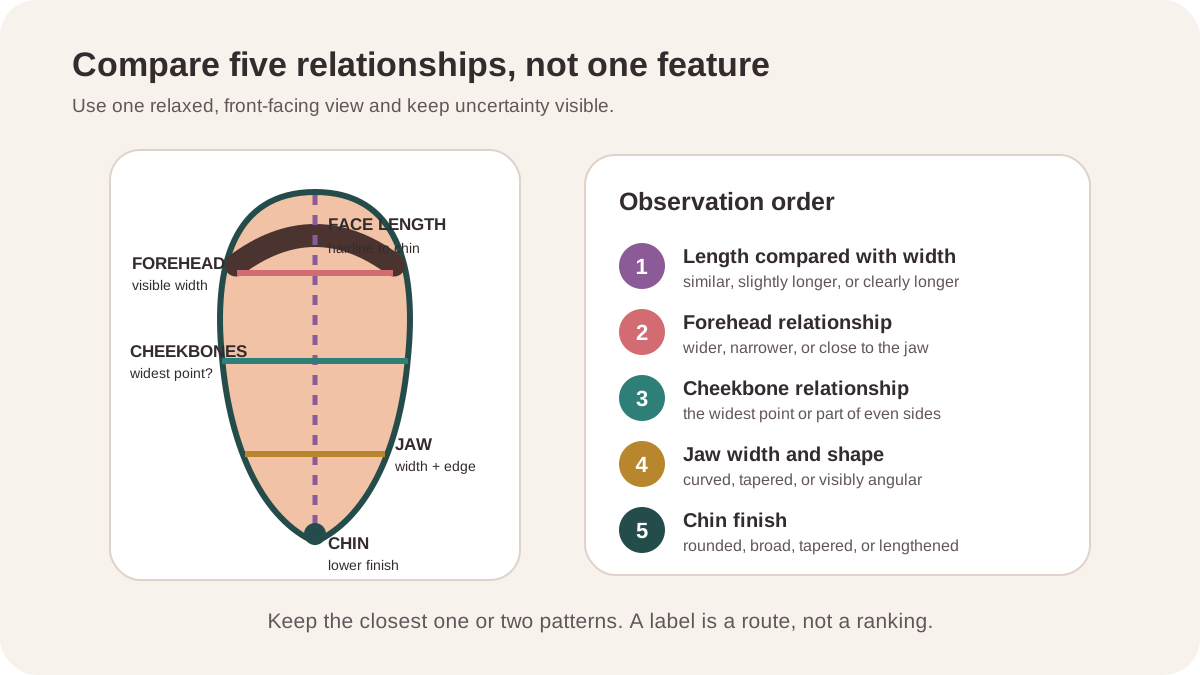
Start with five observations: face length, forehead width, cheekbone width, jaw width and shape, and chin shape. Read them as relationships. For example, ask whether the face looks clearly longer than it is wide, and whether the cheekbones appear wider than both the forehead and jaw. One isolated feature is not a result.
If you want a guided comparison, use the face shape detector. It asks five transparent questions and can return two routes when the answers tie. It does not analyze a photo or calculate a medically precise category. If you already recognize one or two likely patterns, move directly to the six guide cards below.
Your practical next step is to write down one length relationship, the widest visible area, and one lower-outline clue before choosing a guide.
Use One Clear Decision Framework
Read the same variables in the same order so that a prominent feature does not outweigh the full outline.
| Observation | What to compare | What it helps separate |
|---|---|---|
| Face length | Similar to width, slightly longer, or clearly longer | Rounder patterns from oval or oblong patterns |
| Forehead | Width relative to cheekbones and jaw | Balanced upper width from a visibly wider or narrower upper outline |
| Cheekbones | Whether they form the widest point | A diamond pattern from shapes with more even side widths |
| Jaw | Width plus curved, tapered, or angular edges | Square clues from softer or narrower lower outlines |
| Chin | Rounded, broad, tapered, pointed, or lengthened | Lower-outline differences after the other observations are considered |
Once you have one or two likely patterns, switch from classification to placement. Decide where you want the haircut’s strongest horizontal line: above the jaw, near the jaw, around the collarbone, or lower. Next choose whether volume sits at the crown, sides, ends, or follows your natural texture. Fringe and parting are separate choices because they change how much forehead is visible and where the eye meets the first strong line.
Haircut brief builder
Turn five choices into one clear request
Choose only what matters to you. Leave any flexible detail as “Open to advice.”
This order keeps face shape in its proper role. It helps you describe a visual effect, while texture, density, strand diameter, growth patterns, and routine determine how that effect can be built. Your next step is to circle one placement variable you want to emphasize and one you want to keep flexible.
Compare the Main Options
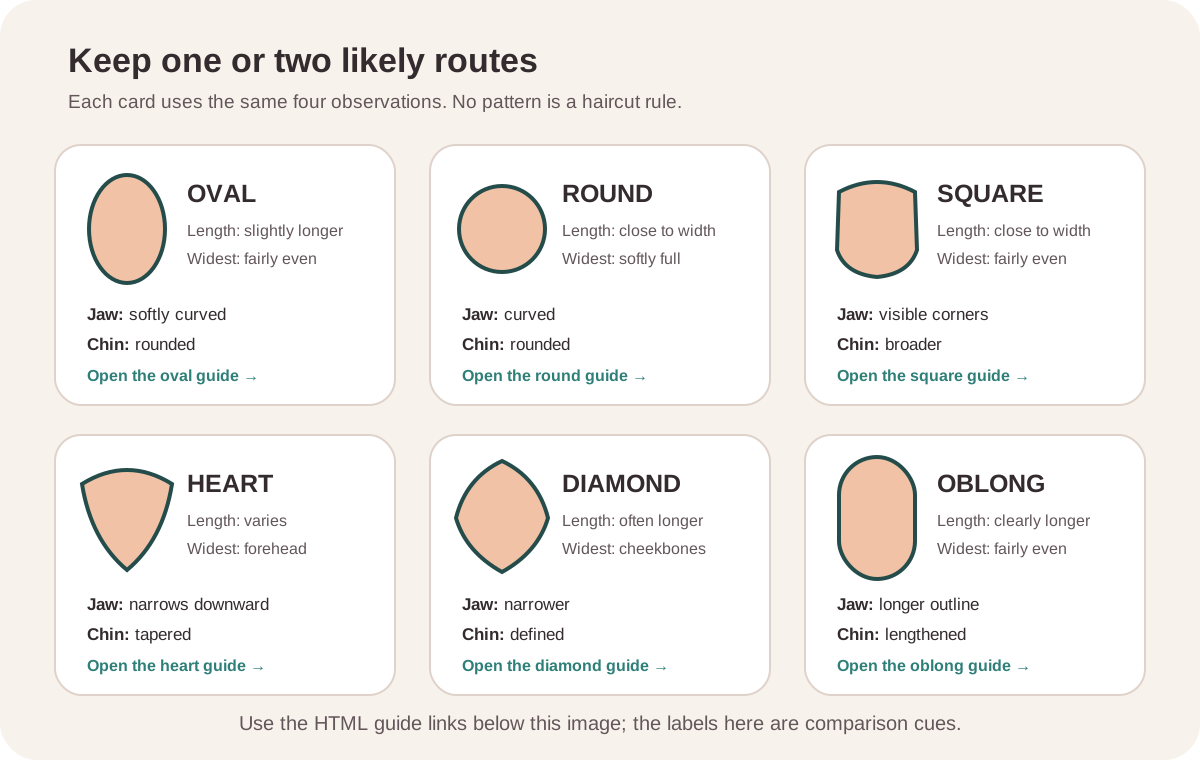
The six routes use identical criteria so you can compare them without ranking or corrective language.
Oval
Slightly longer than wide, with widths that feel relatively even and a softly curved lower outline.
Open the oval guideRound
Length and width appear close, with a softly full outline, curved jaw, and rounded chin.
Open the round guideSquare
Forehead, cheekbones, and jaw appear similarly wide, with visible jaw corners and a broader chin.
Open the square guideHeart
The forehead appears wider than the lower face, and the jaw narrows toward a tapered or pointed chin.
Open the heart guideDiamond
Cheekbones appear widest while the forehead and jaw narrow, often ending in a defined or tapered chin.
Open the diamond guideOblong
The face appears clearly longer than wide while the forehead, cheeks, and jaw stay fairly similar in width.
Open the oblong guideOval and round can share a curved jaw, but their length-to-width relationship differs. Heart and diamond can both taper toward the chin, but the widest point shifts from the forehead to the cheekbones. Square and oblong can both have straighter side relationships, while their overall length differs. Your next step is to open only the closest one or two guides, not all six.
State Limits and Practical Constraints
A face-shape label cannot predict how a haircut will behave. Texture changes the edge and movement; density changes visual weight; growth patterns affect fringe and parting; shrinkage changes the dry landmark. Personal preference can also override every placement convention. A blunt line, full fringe, or strong side volume is a valid deliberate choice when you understand the result and upkeep.
Observation conditions matter too. Hair over the forehead can change the visible upper outline, and expression can change the jaw and cheek area. Close camera distance can distort facial features, as demonstrated in a 2024 Laryngoscope study of digital portrait distortion. If you use a photo, compare a relaxed, front-facing reference with your mirror view rather than treating either one as exact.
A licensed hairstylist can translate the placement you want into a perimeter, layers, fringe, and parting that work with your hair. Bring front, side, and back reference photos, name the dry-length landmark, and ask for an individual shrinkage check when relevant. Your next step is to keep two shape hypotheses if needed and add your actual hair behavior before discussing the cut.
Route the Reader to the Next Best Page
Choose the owner that matches the unresolved decision:
- Use the face shape detector when you want a transparent five-question comparison before opening a shape guide.
- Open the dedicated oval, round, square, heart, diamond, or oblong guide when one or two proportion patterns are already plausible.
- Compare bangs by face shape when fringe opening, density, edge, or side connection is the decision.
- Compare bob haircuts by face shape when perimeter length, side volume, and the strongest line are the decision.
- Return to the hairstyles and haircuts hub when dry length, named cut, texture, density, or maintenance matters more than a proportion label.
This hub does not repeat the detailed recommendations from those pages. It owns the neutral framework and routing; each child guide owns its specific haircut examples. Your next step is one page and one concrete question—for example, “Where should my bob perimeter sit?”—rather than another generic list.
Frequently Asked Questions
What hairstyle suits my face shape?
Start with the effect you want, not a universal “best” style. Choose a dry length, strongest line, volume placement, fringe opening, and parting, then check how your texture and density support them. Use the closest shape guide for examples, but let comfort, routine, and personal preference make the final decision.
Can my face be between two shapes?
Yes. Mixed proportions can make two descriptions equally useful. Keep both when the same observations support them—for example, an oval-to-oblong length relationship with a softer jaw. Compare the two linked guides and retain the placement ideas that fit your goal instead of changing an observation to force one label.
Is a face shape detector exact?
No. The detector is a transparent comparison quiz, not photo analysis, a measurement system, or a diagnosis. Hairline visibility, camera distance, head angle, expression, and your own interpretation can change an answer. Use the result to narrow the route to one or two guides, not to claim a precise category.
Should face shape decide my haircut?
No. Face shape is an optional placement filter. Texture, density, strand diameter, growth patterns, shrinkage, dry length, daily styling, and the look you prefer can matter more. A useful consultation combines your placement goal with those starting conditions rather than treating the outline as a rule.
Do bangs work for every face shape?
Bangs can be considered for any face shape because the choice is about geometry and preference, not permission. Compare the opening, density, edge, length, and side connection. Then check your hairline, cowlicks, texture, styling effort, and trim tolerance in the dedicated bangs-by-face-shape guide.
Choose the next step that matches your goal: identify one or two likely patterns, compare a specific placement choice, or move to the broader haircut hub.