
Hairstyles for Square Faces: Choose the Effect You Want
The best hairstyles for square faces depend on the effect you want: diagonal movement can soften the outline, length can draw the eye downward, and a clean perimeter can highlight the jaw. Choose the effect you want rather than correcting your face.


Face shape is a descriptive framework, not a diagnosis. A square-like outline often has similar visible width at the forehead, cheekbones, and jaw, with a fairly defined corner where the jaw turns toward the chin. That structure does not require a particular haircut. Start with the line you want to create, then adjust it to the way your hair actually falls.
Confirm Square-Like Proportions Without Calling Them Flawed
Pull your hair away from your face and look straight ahead in even light. Compare the width at your forehead near the temporal line, across the cheekbones or zygomatic arch, and between the outer jaw corners. If those widths look close and the sides taper only slightly toward a broader chin, “square-like” may be useful shorthand. A roughly 1:1 impression of face width to length is a visual clue, not a measurement requirement or a beauty score.
The mandibular angle is the corner where the lower jaw changes direction; gonial angle is its anatomical name. You do not need to locate either precisely. Notice where the jawline makes its strongest visible turn, because a haircut ending at, above, or below that point creates a different outline. Many faces mix square, round, and oblong characteristics, and hairline, expression, and head angle all affect what you see.

A close selfie is a poor sole reference. In a study of facial photography, short camera-to-subject distances distorted facial features with both smartphone and full-frame cameras. Step back for a neutral photo and compare it with a mirror view before treating any apparent width ratio as settled. The face shape detector can supply comparison language, while the broader face shape guide keeps mixed proportions in view.
Start With the Effect You Want
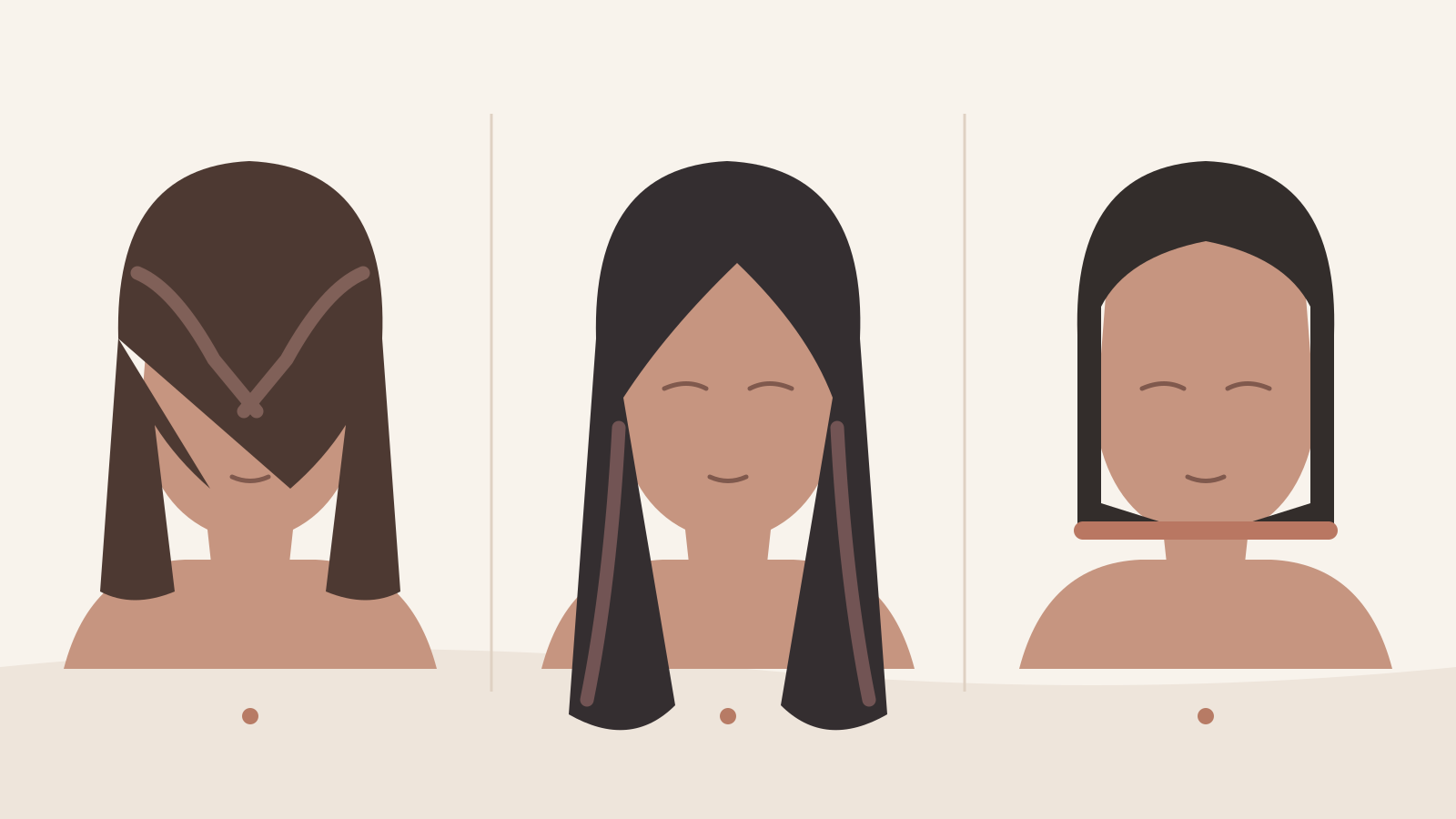
Choose the effect you want rather than correcting your face. Diagonal movement can make the outline read softer; more length below the jaw can emphasize a vertical line; a deliberate straight edge can celebrate the jaw’s geometry. None is the default or the most flattering choice for everyone. The same person may enjoy a softer everyday cut and a more graphic styled finish.

| Desired effect | Line and volume to request | Useful example | Tradeoff to check |
|---|---|---|---|
| Softer outline | Broken perimeter and diagonal face framing that moves past the jaw corner | Textured collarbone lob or layered haircut with curtain bangs | Short pieces may need daily direction to stay diagonal. |
| More vertical movement | Length below the jaw with a quieter side silhouette and a visible downward line | Long cascading layers or a lob with a longer front | Heavy unlayered length can hang flat on some hair. |
| Graphic jaw emphasis | A clean, intentional perimeter near or below the mandibular angle | Architectural blunt bob or precise crop | A sharp edge shows uneven growth and may need more frequent shape checks. |
Compare Length and Volume Placement
Pixie or crop. A short cut leaves the jaw visible, so the crown, fringe, and side shape do most of the design work. Piecey texture and a diagonal front create movement; a clean side and blunt fringe make the geometry more graphic. Ask where the cut will look widest after air-drying, rather than assuming every short cut produces the same effect.
Collarbone lob. A collarbone lob places the main weight below the jaw while preserving enough length for face framing and, often, a tie-back. A soft broken edge offers movement; a straighter edge reads more architectural. On waves or curls, agree on the dry landing point, because the finished perimeter may rise after it dries.
Long layers. Long diagonal layers can carry the eye below the face without hiding the jaw. Place the shortest front layer with intention: at the cheekbone it adds side emphasis, below the jaw it draws attention downward. If the hair is fine or low density, too many short layers can make the ends look sparse; keep enough weight in the bottom edge.
Blunt bob. A chin or below-chin bob makes the cut line easy to see. Landing at the jaw corner repeats its width, while landing just below creates a separate horizontal line. Neither is wrong. Check both front and profile views, and decide whether the clean edge is worth the styling and shape maintenance it asks of your hair.
Compare Partings and Bangs
A side part introduces a diagonal from the temporal line toward the cheek or jaw. A center part makes the arrangement more symmetrical and can give long hair two uninterrupted vertical panels. Test the part on your dry hair; a growth pattern may move it back to its usual position.
Curtain bangs create an opening above the face and sweep toward the cheeks. They can soften the jaw’s angular impression by adding a second curved line, but their shortest point and the hairline decide how easily they sit. A textured fringe gives a less continuous forehead edge. A straight blunt fringe makes a strong horizontal line, which may be exactly the graphic effect you want. Compare the practical lengths in the curtain bangs guide and the broader bangs by face shape guide.
Let Hair Behavior Override the Diagram
Any haircut can be adapted when hair behavior and routine are considered. The silhouette on a reference photo depends on hair density, strand diameter, wave pattern, styling, and where the weight is removed. A face diagram cannot predict the final dry shape.

Fine straight hair often reveals a blunt edge and every layer transition. Medium-density waves can move the widest point from cheek to jaw between wash days. Curly hair may spring above the wet cutting line, while coily hair can build width away from the head. Curl shrinkage varies by section and styling, so use your own dry length as the reference. Density is separate from curl type: a dense head of fine strands and sparse coarse strands can require different weight placement.
Bring a photo of your hair after its usual wash and dry, without an exceptional salon finish. For curls and coils, discuss where the shortest face-framing piece lands when dry, how the shape changes when stretched, and whether a dry refinement would help. For straight or wavy hair, show where a cowlick, parting, or natural bend changes the planned line.
Build a Reference and Choose the Next Owner
Save one front and one side photo of the haircut you want, plus a photo of your own hair in its everyday dry state. Mark the target perimeter with a body landmark such as jaw, shoulder, or collarbone. Name the effect—soft diagonal movement, vertical length, or a graphic edge—and point to where you want the widest part of the silhouette. Include one reference showing an effect you would prefer to avoid.
Tell the stylist how you normally part, dry, and tie back your hair, and how much daily resetting you will actually do. Ask them to confirm the shortest fringe or face-framing length, the weight line, and the finished dry outline before cutting. If shrinkage or growth patterns make the landing point uncertain, leave room for a dry check and a smaller second adjustment.
For a wider set of proportion comparisons, return to the face shape guide. Use the detector as vocabulary for a consultation, then compare fringe placement in bangs by face shape. Your stylist owns the physical cut; your preference owns the effect.
Frequently Asked Questions
How can I tell whether my face is square-like?
Look for a forehead, cheekbone area, and outer jaw that appear similar in width, with relatively little taper toward the chin. A visible corner at the jaw can strengthen that impression. Use a neutral view rather than a close selfie, and allow for mixed proportions.
What is the best haircut for a square face?
There is no universal best. A textured collarbone lob offers movement below the jaw, long layers emphasize vertical length, and a precise bob highlights the jawline. Choose the silhouette you want and check whether your hair can reproduce it in your daily routine.
Do curtain bangs work with a square jaw?
They can. Their open center and diagonal sides add a curved line near the cheekbones, but the result depends on fringe length, density, parting, and growth pattern. A longer version is easier to tuck away while you test the effect.
Do I have to soften my jawline?
No. A blunt bob, clean crop, or straight fringe can emphasize its structure intentionally. If you like that graphic result, ask for a precise perimeter and a plan for how the line will grow out.
What changes if my hair is curly or coily?
Judge the haircut at its finished dry length and volume. Curl shrinkage may raise a fringe or perimeter, while dense coils may place more width at the sides. Share references with a similar texture and plan for a dry shape check rather than copying a straight-hair outline exactly.